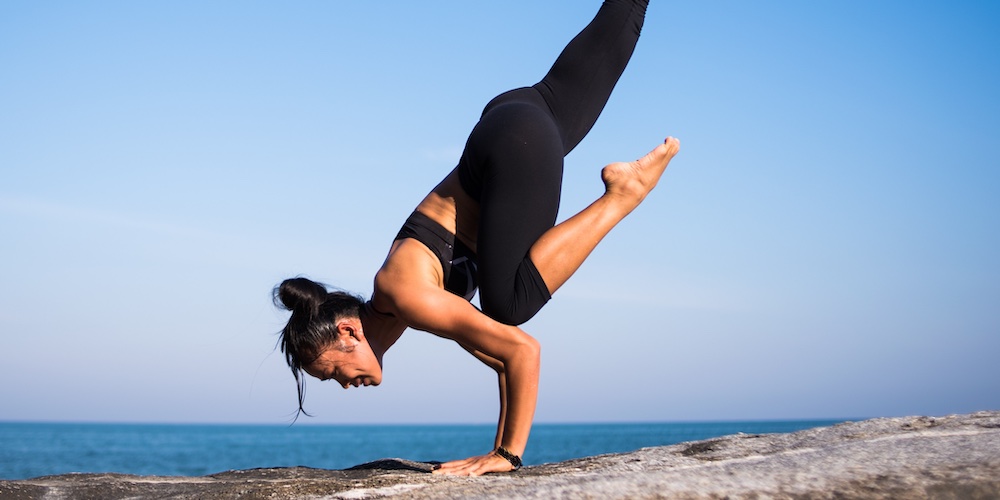
“A core strength training program enhances athletic performance”
Axel, Crussemeyer, Dean & Young (2018)
In simple terms its the muscles that cover the full circumference of your trunk like a big belt from your spine, all the way round your front then attaching back to the other side of the spine. They are responsible for;
Muscles working together to perform everyday tasks and movements.
Holding the body upright against gravity such as standing and even sitting.
Helping us to perform movements that involve unstable or uneven surfaces. Movements such as walking require a large amount of core strength.
Abdominals, or rectus abdominis and obliques, are the large muscles that appear down the front and side of the torso. These are called primary movers. They are involved in flexing forward as well as rotation and side flexion. They help to generate movement as well as providing some trunk large stabilisation when you are using your arms out at length. These can often regarded as the outer Core.
The Core muscles or inner core, consist of a group of deeper muscles. These are are the pelvic floor muscles, transversus abdominis, multifidus, erector spinae (sacrospinalis) especially the longissimus thoracis, the diaphragm and quadratus Lumborum. It is this collection of muscles that are in control of stabilising the trunk and body.
A healthy back and good posture.
In a world where it is not uncommon for people to be sat at a desk for 8 hours of the day. Complaints of lower back pain are on the rise.
Akhlaq et al (2018) found that “core muscle stabilization with lumbar stretching were more effective than core muscle stabilization exercises alone for the management of non-specific low back pain”
Improved athletic performance
All large powerful movements start from the core whether you realise it or not. A golfer will engage their core before starting a swing, as will a tennis player before winding up for a serve.
As well as improving performance it helps prevent injury ,that is why we see professional rugby players participating in ballet and yoga sessions. Axel, Crussemeyer, Dean & Young (2018) found that a “core strength training program enhances athletic performance” and “will likely increase competition success”
Resilience means something different to everyone
Build your resilience together with Riixo
Akhlaq Ahmed A. et al, 2017. Effectiveness of Core Muscle Stabilization Exercises with and without Lumbar Stretching in Non-Specific Low Back Pain. Annals of King Edward medical University Vol 23 No 3 (2017): AKEMU
Axel AT, Crussemeyer J, Dean K, Young DE. 2018. Field Test Performance of Junior Competitive Surf Athletes following a Core Strength Training Program. International Journal of Exercise and Science. IJES, Vol. 11, Iss. 6 (2018)
Johnson CD et al. 2018. The Relationship of Core Strength and Activation and Performance on Three Functional Movement Screens. The Journal of Strength & Conditioning Research: April 2018 - Volume 32 - Issue 4 - p 1166–1173
 British Triathlon: Recovery Questions Answered
 The Injury Risk Equation
 LJMU Study Findings
 What are shin splints?
 How to treat shin splints [2021]
No Thanks – I’ll pay full price
Close Window
Close Window
