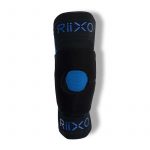
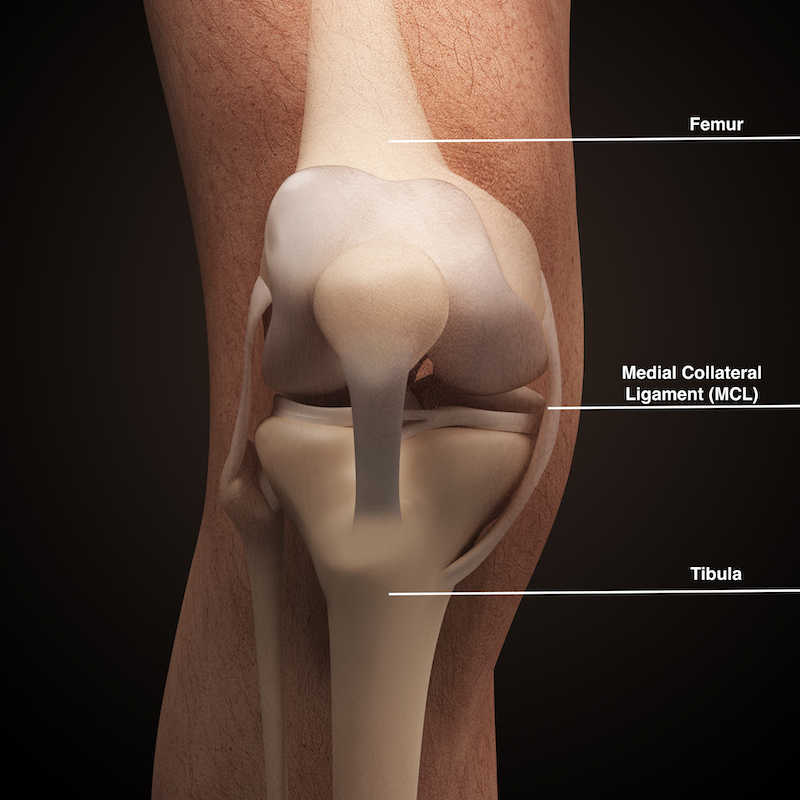
An MCL sprain is an injury to the thick ligament on the inside of the knee that helps to provide structure and stability to the joint.

The Medial Collateral Ligament (MCL) is found on the inside of the knee and is a tough fibrous tissue that attaches bone to bone
This ligament, along with the Lateral Collateral Ligament (LCL), helps to form the knee joint by attaching to the shin and the thighbone, it also provides stability and ensure that the knee functions properly when you move.
Ligament sprains most commonly happen when the ligament is very quickly put on an excessive stretch, has a large force applied to it or takes direct contact. That is why ligament injuries are often easy to identify as they are normally linked to a traumatic incident such as a slip, trip, fall or collision.
In some cases, low-level MCL sprains are caused by repeated stress being applied to the knee causing the ligament to stretch. This can often be seen in dancers and gymnasts or people to have flat feet.
There are different levels of a sprain.
Grade 1 is an overstretch of the ligament which will leave small tears on some of the fibres.
Grade 2 is a partial tear. Somewhere along the ligament, there will be a significant tear to the ligament but it will still be attached
Grade 3 is a complete tear through the centre of the ligament. There is also something called an avulsion where the ligament is intact but has been pulled from the bone.

The following protocol can immediately help a Grade 1&2 sprain or can be used after surgery on an MCL rupture.
The POLICE protocol
When acute pain first appears follow this protocol:
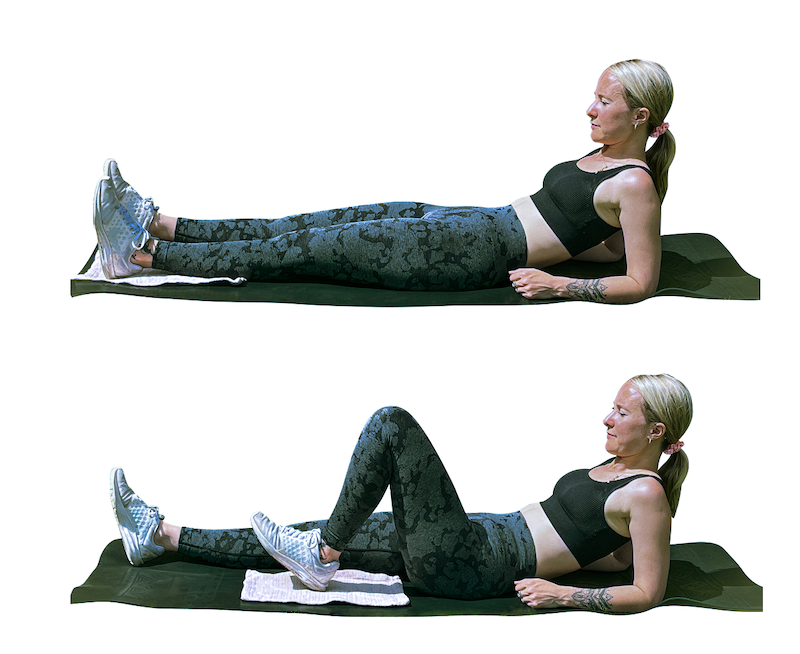
This exercise is designed to strengthen the hamstrings and improve the range of movement in the knee
Frequency and duration
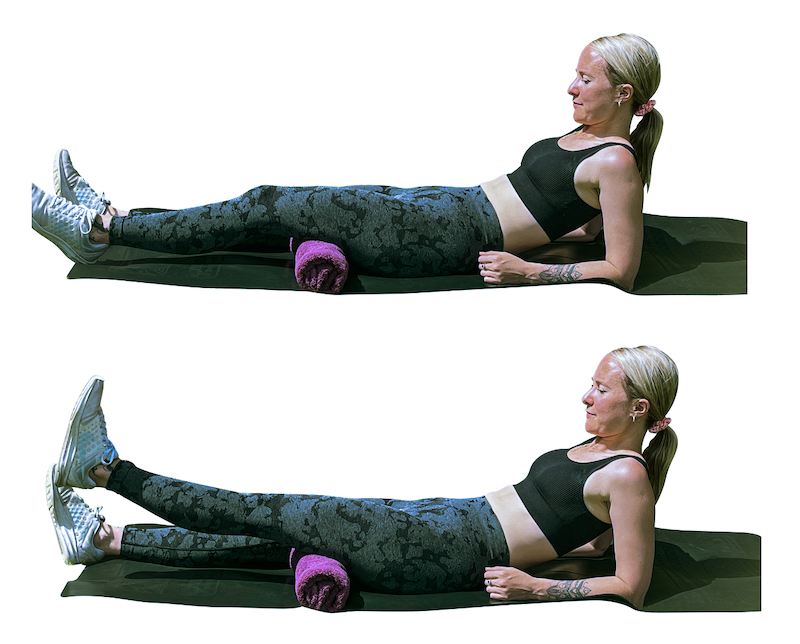
This exercise targets the small quad muscle on the inside of the knee that controls the last 10 degrees of extension and helps stabilise the knee.
Frequency and duration
Alternatives

This exercise is designed to strengthen the hamstring muscles on the back of the thigh.
Frequency and duration
Alternatives
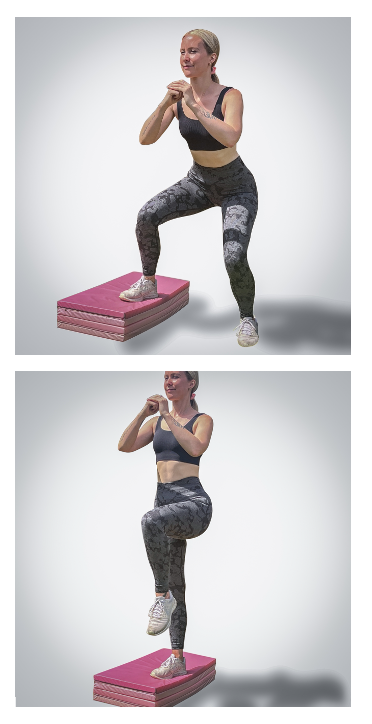
This exercise is designed to improve leg strength, balance and neuromuscular control.
Frequency and duration
Alternatives

This exercise is designed to build leg and core strength
Frequency and duration
Alternatives
The information on this site is intended for educational purposes.
You must not rely on the information on this website as an alternative to medical advice from your doctor or other professional healthcare provider. If you have any specific questions about any medical matter you should consult your doctor or other professional healthcare provider. If you think you may be suffering from any medical condition you should seek immediate medical attention. You should never delay seeking medical advice, disregard medical advice, or discontinue medical treatment because of information on this website.
No Thanks – I’ll pay full price
Close Window
Close Window