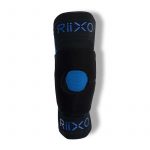
Tendinopathy and tendonitis are often used interchangeably. They both have almost identical symptoms, however, they are different conditions.

Tendonitis and tendinopathy of the knee refer to the inflammation, irritation and breakdown of the thick fibrous cords that attach muscle to bone.
Tendinopathy is a degeneration of the collagen protein inside of the tendons.
Tendonitis is inflammation of, or around, the tendon.
Both conditions cause burning pain in the tendon or where it attaches to the bone. It will also cause the joint, in this case, the knee, to feel stiff after rest resulting in a reduced range of movement.
The pain will depend on the tendon that is involved. There are a number of tendons that attach to the knee in different places and the easiest way to identify the pain is often by the movement that brings it on;

Often there is an overlap in the cause of the tendonitis due to the large number of tendons that attach to the knee.
Muscles of the upper leg.
Muscles of the lower leg.
Both tendinopathy and tendonitis are often caused by the overuse of a tendon through repetitive movements such as running.
Muscle imbalance. Biomechanical differences such as muscle strength imbalance or weakness can be a large contributing factor. If an athlete is returning from injury or a period of rest some muscles will be stronger and better conditioned than others resulting in one of two things happening;
A sudden increase in training intensity and volume can also be a contributing factor to tendinopathy, especially if there has been insufficient build-up training or inadequate recovery time. If the body, specifically the tendons, does not have time to adapt to the training load or is not given time to repair and recover the tendons will start to break down.
If you suspect that you are suffering from any form of tendon damage then it is recommended that you do the following:
The POLICE protocol
When acute pain first appears follow this protocol:
Avoid aggravating the tendon. This can be as simple as reducing your training load or in some cases, you may be required to completely rest the knee to allow the tendon to repair itself.
Reduce impact-based exercises such as running, especially running on an incline or declined surface as this will only increase the forces through the knee.

This exercise is designed to strengthen the hamstring muscles on the back of the thigh.
Frequency and duration
Alternatives

This exercise is designed to improve leg strength and knee control.
Frequency and duration.
Alternatives
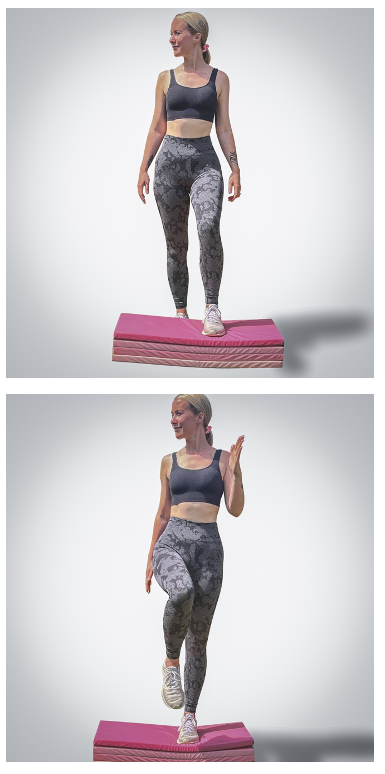
This exercise is designed to improve leg strength and neuromuscular control.
Frequency and duration.
Alternatives

This exercise is designed to improve leg strength and neuromuscular control.
Frequency and duration.
Alternatives

This exercise is designed to improve single-leg strength.
Frequency and duration
Starting from the centre:
Alternatives
The information on this site is intended for educational purposes.
You must not rely on the information on this website as an alternative to medical advice from your doctor or other professional healthcare provider. If you have any specific questions about any medical matter you should consult your doctor or other professional healthcare provider. If you think you may be suffering from any medical condition you should seek immediate medical attention. You should never delay seeking medical advice, disregard medical advice, or discontinue medical treatment because of information on this website.
No Thanks – I’ll pay full price
Close Window
Close Window