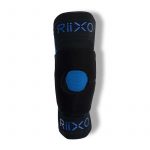
ACL sprain or rupture happens to the large thick ligament in the centre of the knee. It commonly happens in contact sports when the foot is planted and the body rotates under force causing a twisting of the knee.

The ACL is a thick ligament inside the knee that joins the thigh bone (femur) to the shin bone (tibia). ACL injuries occur when the knee is twisted suddenly, think of a skier who has an accident which causes one of their skis to turn in one direction and the body turns the opposite way. This twisting puts high levels of stress on the ACL as it tries to keep the knee together.
There are different levels of ligament injuries
For grades one and two this is often the most painful. For people who experience a sudden sharp pain in the knee with some swelling that builds up over the next 24hr period.
For a grade 3, referred to as a ruptured ACL or ACL tear, you may hear a “pop” in the knee with a short pain. As the ligament has torn you will experience immediate swelling, the knee feeling unstable and painful when you take weight through it.
Depending on the severity you may require surgery to repair the ligament

You experience a sharp shooting pain inside the knee when you try to take weight through the leg.
The initial injury will feel sharp and sudden, sometimes accompanied by a “pop” depending on the severity of the injury. you will also experience;
Grade 1 & 2 sprain.
This is an injury to the ACL where the ligament is still intact. The management is designed to reduce pain and swelling as well as provide adequate support to enable you to strengthen the surrounding muscles.
Grade 3 (ACL rupture)
These exercises are designed to be used for Grade 1 & 2 ligament sprains where the ligament is still intact or after the brace has been removed for any ACL reconstruction surgery.

This exercise helps with neuromuscular control by strengthening the small intrinsic muscles that help with balance, joint stability and movement feedback to the brain.
Frequency and duration
Alternatives
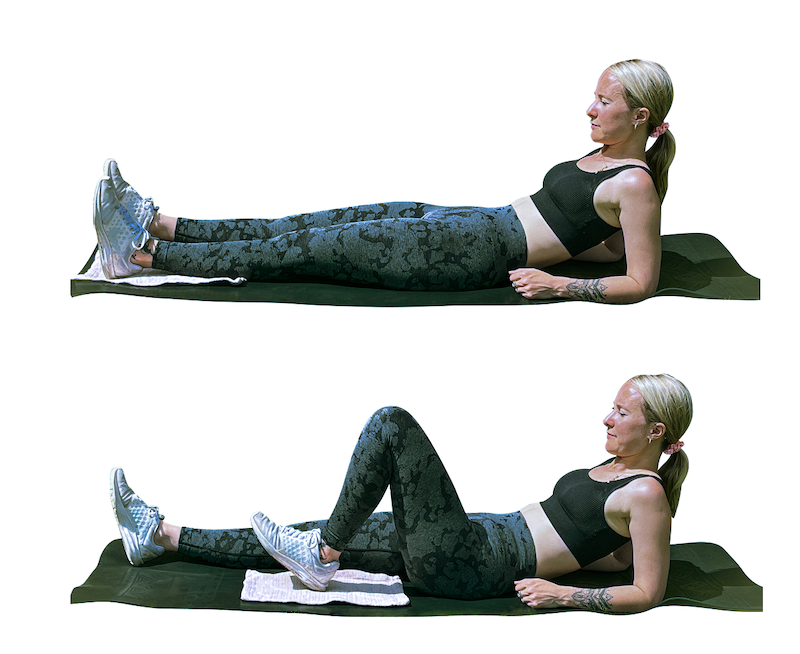
This exercise is designed to work on hamstring strength in a controlled environment as well as working on your knee bend.
Frequency and duration
Alternatives
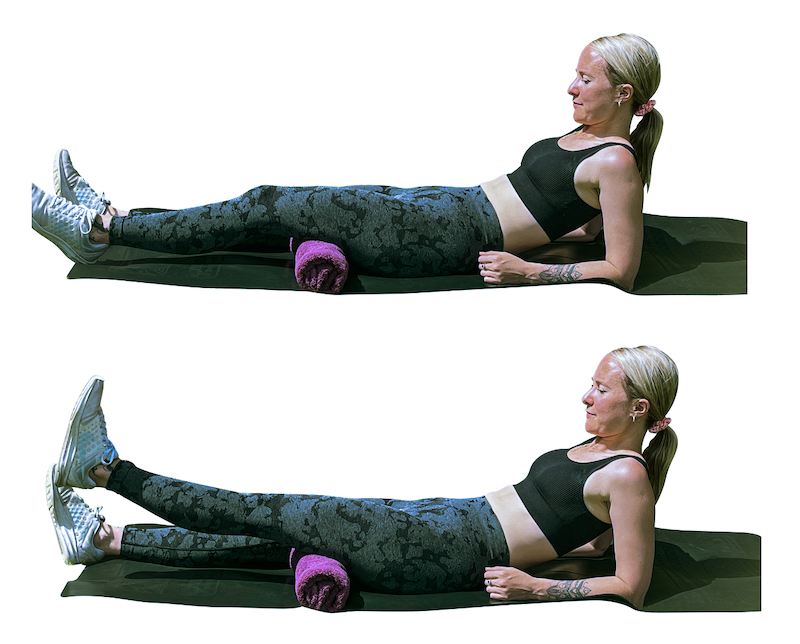
This exercise targets the small quad muscle on the inside of the knee that controls the last 10 degrees of extension and helps stabilise the knee.
Frequency and duration
Alternatives

This exercise strengthens muscles in your quadriceps and your hip flexors as a collective group.
Frequency and duration
Alternatives

This exercise is designed to strengthen the hamstring muscles on the back of the thigh.
Frequency and duration
Alternatives
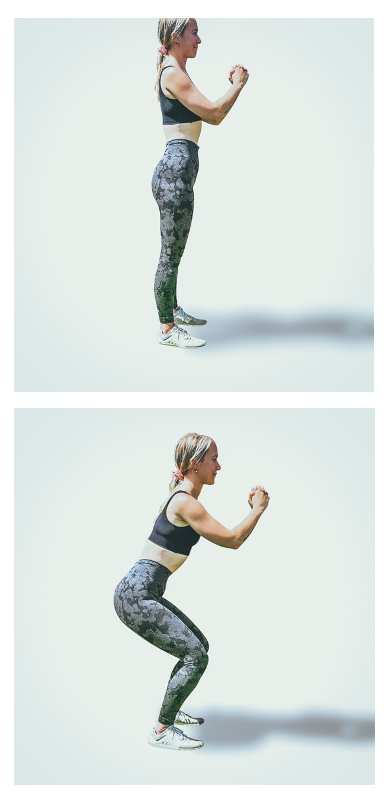
This exercise works all the muscles of the lower body and trunk together as well as taking weight through the knees.
Frequency and duration
Alternatives
The information on this site is intended for educational purposes.
You must not rely on the information on this website as an alternative to medical advice from your doctor or other professional healthcare provider. If you have any specific questions about any medical matter you should consult your doctor or other professional healthcare provider. If you think you may be suffering from any medical condition you should seek immediate medical attention. You should never delay seeking medical advice, disregard medical advice, or discontinue medical treatment because of information on this website.
No Thanks – I’ll pay full price
Close Window
Close Window