
Typically referred to as a "pulled muscle", a calf strain is an injury to the large muscles, or tendons, in the lower portion of the leg. These muscles are used to propel us forward when we are walking and running.
There are three grades of muscle strain to be aware of:
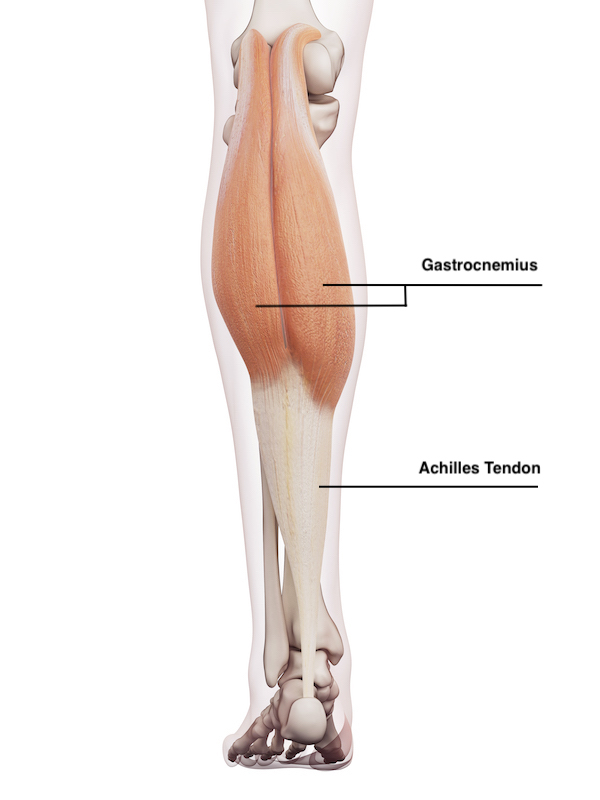

You will most likely experience the pain in one of two places. In the belly of one of the Gastrocnemius muscles, in the centre of the large meaty part of the calf, or calf muscle attaches to the Achilles tendon.
With a Gastrocnemius strain, you will be able to place your finger directly on the area that hurts.
What the pain feels like.
A repetitive strain will be a gradual build-up over time, starting as a bit of stiffness in the morning, easing with a light warm-up and some exercise then becoming increasingly painful towards the end of your training and through the night.
A sudden muscle strain will often present as:
What makes the pain worse?
Sudden calf strain
Repetitive strains
This is often a lot more subtle and the pain will build up over time. Repetitive strains to the calf muscles have been linked to:
Something to be aware of is a blood clot in the calf or DVT (Deep vein thrombosis) as these can present similarly. There is one main difference that makes it stand out:
A test you can do is sitting down on a chair with your leg out straight in front of you, pointing your toes towards you (toes towards the nose) then squeezing the calf. If you experience intense pain, you should seek medical advice immediately.
For grade 3 tears you may require surgery

This exercise helps with neuromuscular control by strengthening the small intrinsic muscles that help with balance, joint stability and movement feedback to the brain.
Frequency and duration
Alternatives

This exercise is designed to help strengthen the calf muscles as well as improve ankle mobility.
Frequency and duration
Alternatives
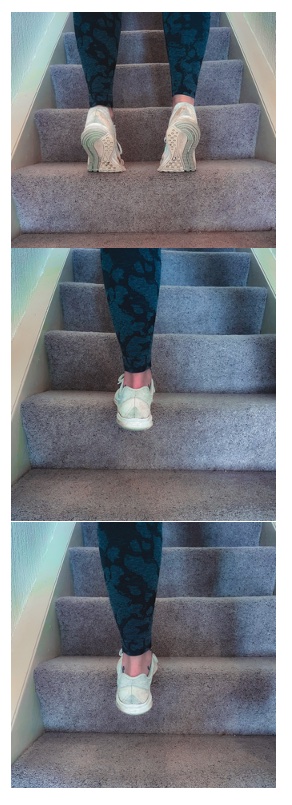
This exercise is will help to strengthen the calf muscles in a controlled manner using your body weight.
Frequency and duration

This exercise uses your body weight to strengthen the calf muscles.
Alternatives

This exercise is designed to improve single-leg strength.
Frequency and duration
Starting from the centre:
Alternatives
The information on this site is intended for educational purposes.
You must not rely on the information on this website as an alternative to medical advice from your doctor or other professional healthcare provider. If you have any specific questions about any medical matter you should consult your doctor or other professional healthcare provider. If you think you may be suffering from any medical condition you should seek immediate medical attention. You should never delay seeking medical advice, disregard medical advice, or discontinue medical treatment because of information on this website.
No Thanks – I’ll pay full price
Close Window
Close Window


